何でも検索してください。

ブログ

スリッターと巻き取り機の選択ガイド:シナリオに合わせて効率的に生産する

スリット技術2025年12月8日0

In modern packaging, printing, film manufacturing, and other industries, slitting and rewinding machines are key equipment that connects production with finished products. A suitable slitting and rewinding machine can not only greatly improve production efficiency, but also reduce material loss and ensure product quality. However, in the face of a wide variety of equipment on the market, how to choose the model that best matches their production needs has become a challenge for many companies. This article will provide you with a comprehensive slitting and rewinding machine selection guide to help you achieve efficient production.

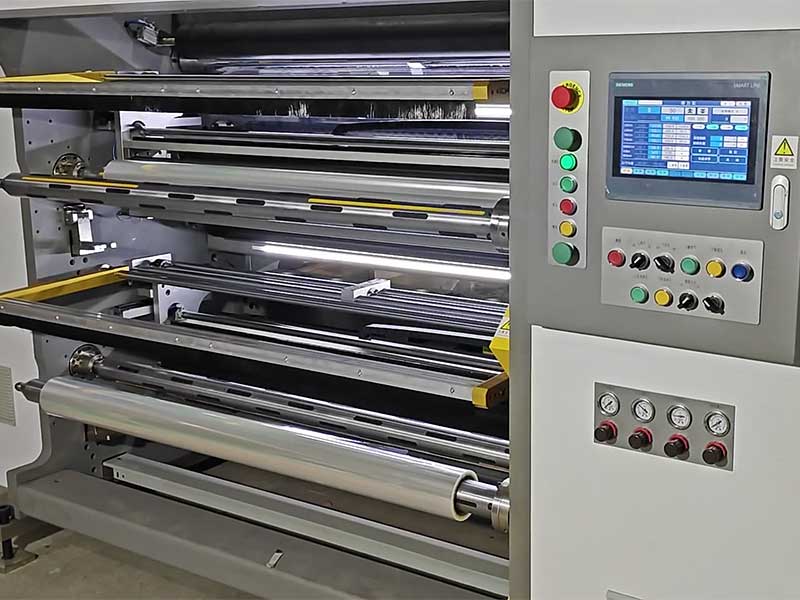
Slitting and rewinding machine selection guide: match the scenario and produce efficiently

1. Understand the basic types of slitting and rewinding machines

Before selecting a model, you first need to understand the main types of slitting and rewinding machines and their characteristics:

1. Manual slitting and rewinding machine

◦ Applicable scenarios: small batches, multi-variety, experimental production or start-ups

◦ Features: Simple operation, low investment cost, but limited efficiency, relying on manual experience

2. Semi-automatic slitting and rewinding machine

◦ Applicable scenarios: small and medium-scale production, with certain requirements for precision

◦ Features: Partially automated, improving production efficiency and consistency

3. Automatic slitting and rewinding machine

◦ Applicable scenarios: Large-scale continuous production, high precision and efficiency requirements

◦ Features: Highly automated, equipped with automatic tension control, correction system, etc., with the highest efficiency

4. Special type slitting and rewinding machine

◦ Applicable scenarios: specific material processing, such as film, paper, non-woven fabrics, metal foils, etc

◦ Features: Designed for specific material properties, highly specialized

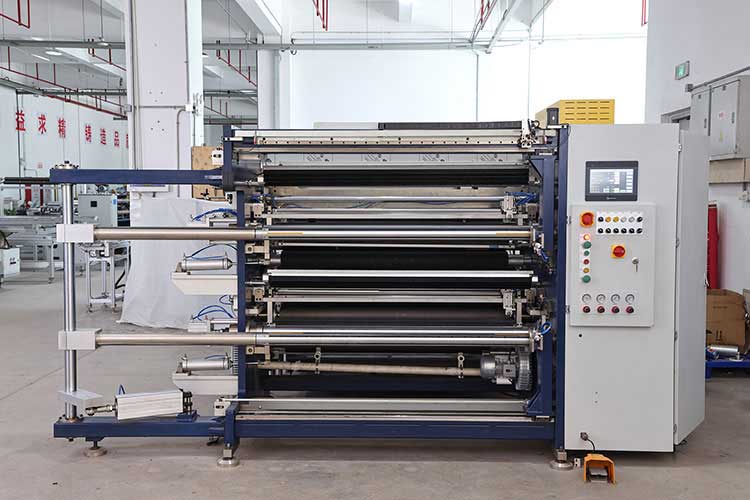
Slitting and rewinding machine selection guide: match the scenario and produce efficiently

2. Key selection factors: match your production scenario

1. Material Characterization

• Material Type: Paper, Plastic Film (BOPP, PET, CPP, etc.), Non-Woven Fabric, Aluminum Foil, Composite Materials, etc

• Material Thickness: Ultra-thin materials, such as 0.01mm films, require more precise tension control

• Material properties: whether it is easy to stretch, easy to static, easy to stick, etc

• Coil specifications: maximum width, maximum diameter, core size, etc

2. Production needs assessment

• Capacity requirements: average daily/monthly output, production shift arrangement

• Slitting accuracy: Requirements for slitting width tolerances (e.g., ± 0.1mm or ±0.5mm)

• Product quality standards: end face flatness, winding tightness, no wrinkles and no bubbles, etc

• Order change frequency: The frequency of product type switching affects the requirements for machine adjustment convenience

3. Process technical parameters

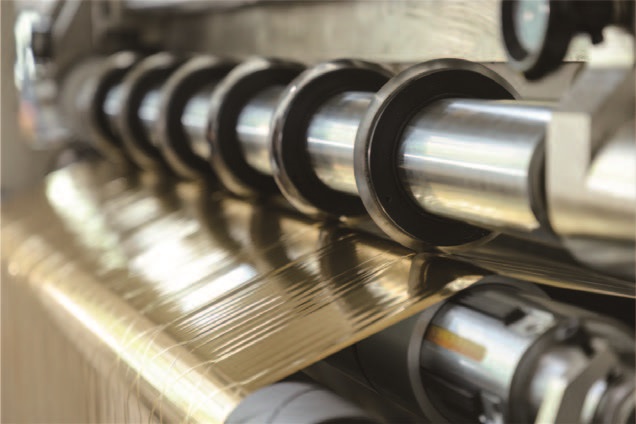
• Slitting methods: razor slitting (for thinner materials), press-slitting (for thicker materials), scissor slitting (high-speed precision slitting)

• Tension control system: open-loop control, closed-loop control, selected according to material sensitivity

• Correction System: Ultrasonic, optoelectronic or CCD correction to ensure neat coil edges

• Unwinding and unwinding configuration: single or double station, affecting the efficiency and continuity of winding changes

• Maximum machine speed: matches the production rhythm of the front and back processes

4. 自動化とインテリジェンスの度合い

• Automation functions: automatic tool change, automatic threading, automatic waste edge removal, automatic labeling, etc

• Data collection and monitoring: real-time production data collection, fault diagnosis, and remote monitoring capabilities

• HMI: Ease of operation, parameter setting and storage functions

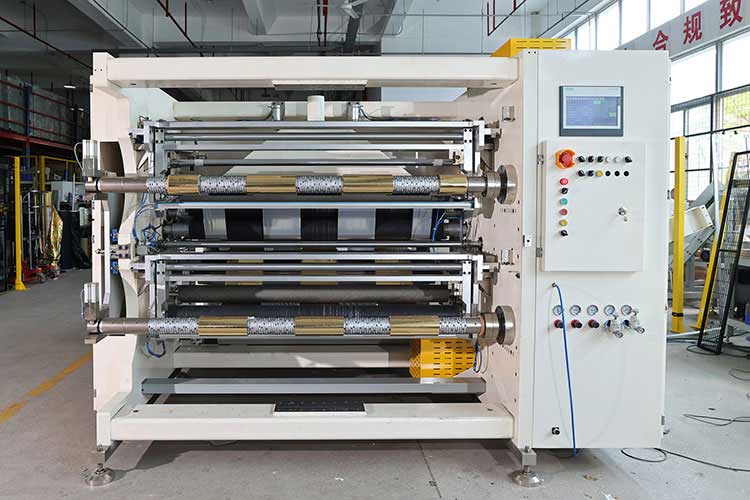
Slitting and rewinding machine selection guide: match the scenario and produce efficiently

3. Key points of consideration for efficient production

1. Energy efficiency and economy

• Energy consumption assessment: Compare the power consumption of different models

• Material utilization: Examine the waste edge control capability of the equipment

• メンテナンス費用: the frequency and cost of wearing parts replacement, and the complexity of daily maintenance

• Footprint: Adapts to the existing plant layout

2. Flexibility and scalability

• Specification range: Can handle a wide range of coils of various widths and diameters

• Function modularity: whether to support the addition of new function modules in the future

• Upgrade potential: Whether the software and hardware support future technology upgrades

3. Safety and environmental protection

• Safety protection: emergency braking, protective cover, safety interlock and other devices

• Noise control: Meets working environment noise standards

• Waste handling: whether there is an integrated waste collection and disposal system

4. Selection decision-making process

1. Demand analysis stage: Record the current production pain points and future development plans in detail

2. Market research stage: collect 3-5 supplier information and conduct preliminary screening

3. Technical evaluation stage: Arrange equipment demonstrations or sample trials to verify key performance

4. Comprehensive Comparison Stage: Establish a scoring matrix that comprehensively considers technical performance, price, service, and brand reputation

5. Decision-Making Implementation Phase: Develop detailed procurement contracts that clarify technical specifications, delivery times, training, and service terms

6. Installation optimization stage: professional installation and commissioning, operator training, establishment of maintenance plan

5. Future trend: intelligence and sustainable development

With the advancement of Industry 4.0, the new generation of slitting and rewinding machines is developing in the following directions:

• Predictive maintenance: Predict equipment failures in advance with IoT sensors

• Adaptive control: AI-based automatic optimization of process parameters

• Energy recovery systems: green technology applications such as brake energy recovery

• Material database: Store the optimal process parameters for different materials, reducing the adjustment time

エピローグ

Choosing the right slitting rewinder is a systematic project that balances current needs with long-term development. The most advanced equipment is not necessarily the best fit, but the one that is highly compatible with your production scenario and achieves the best input-output ratio is the best choice. It is recommended that enterprises organize production, technology, procurement and other departments to participate in decision-making in the selection process, and consult industry experts or third-party consultants when necessary to ensure that the investment benefits are maximized.

Through scientific selection, a suitable slitting and rewinding machine can not only solve the current production bottleneck, but also lay a solid foundation for the development of the enterprise in the next 3-5 years, and truly achieve the goal of "matching scenarios and efficient production".